


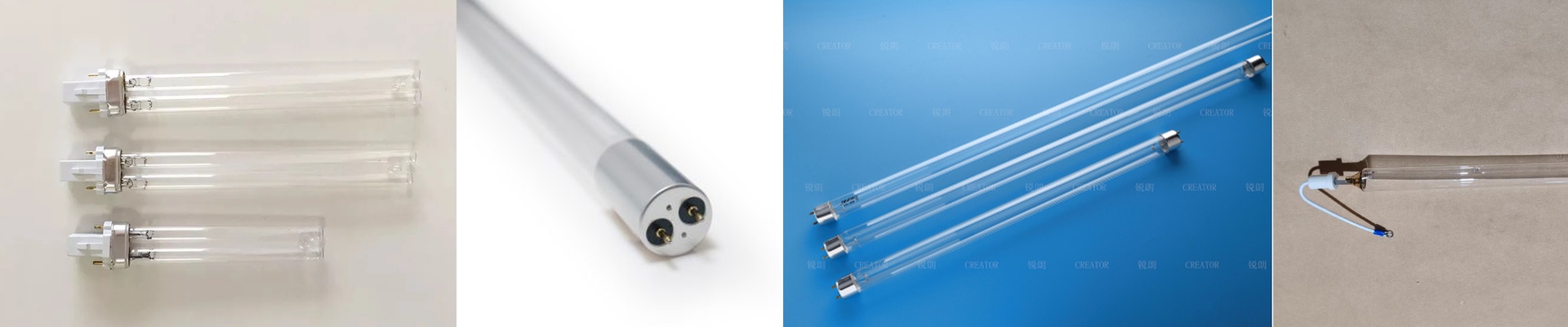


Getting the Most Out of Your UV Curing Tubes
If you’re running a mid-sized print shop, you know the headache. You need your ink to dry perfectly every single time, but you don’t want to spend your entire budget on custom lamps that burn out the moment you look at them funny. It’s a balancing act.
Let’s talk about the output
We build our tubes to keep the light steady from one end to the other. No dead spots. We focus heavily on those UV-C and UV-B peaks because that’s what actually does the heavy lifting. It’s the difference between a job that’s cured all the way through and a job that feels tacky to the touch. But here is the trick: you have to match your wattage to your conveyor speed. I see people cranking the heat just to keep up with a fast line, but all that does is kill your tube’s lifespan. Don’t overwork the gear.
Why they actually last
The glass matters. We use high-purity fused quartz for the envelope. Why? Because it stops “solarization”—that annoying clouding that happens over time and blocks the light. Then there are the electrodes. That’s usually where things go wrong. We use specific alloys to stop “sputtering.” You know that dark metallic film that builds up inside the glass? That’s sputtering. We stop that from happening so the light stays clear.
Fitting them into your shop
These are designed to be simple drop-in replacements. You just tell us the length and wattage you need for your reflectors, and they’ll fit right in. Just a heads-up on one thing: high-intensity tubes put out a lot of heat. A lot. If your cooling fans can’t handle it, you’re going to end up warping your substrates or frying your ballast. And please, for the love of your profit margins,**keep your reflectors polished.**A dusty reflector can tank your efficiency by 20%. It doesn’t matter how expensive the tube is if the mirror is dirty.