



Why “Close Enough” Doesn’t Work for UV Lamps
Here’s the thing: most people treat UV lamps like lightbulbs. You buy a pack, screw them in, and call it a day. But in this business, “close enough” is a recipe for disaster. If your peak wavelength shifts by even 5 nanometers, your sterilization or curing rate can tank by 20%. That’s a huge hit. That’s why we spend our time obsessing over the physics of the arc discharge. We make sure your replacement lamp hits the exact spectral peak your process actually needs.
The struggle with spectral drift
Most off-the-shelf lamps suffer from what we call spectral drift. They just aren’t stable. To fix that, we get picky about the gas mixture and the metals used in the electrodes. Whether you’re using 254nm to kill germs or a specific UVA peak to cure resin, that output needs to be steady from one end of the tube to the other. If it drifts, you aren’t just losing efficiency. You’re risking materials that aren’t fully cured or surfaces that aren’t actually clean.
Glass matters (and so does heat)
We use high-purity synthetic quartz. Why? Because standard glass actually blocks the light you’re paying for. It’s like wearing sunglasses while trying to tan. Our tubes are built to take the heat of rapid cycling without bowing or cracking. But you’ve got to do your part with the ballast settings. I see people push too much current into a narrow-band lamp because they want more intensity. Don’t do that. It kills the cathode and shifts your wavelength. It’s a classic trap: you get a little more power right now, but you sacrifice the stability of the lamp over time.
Getting them into your system
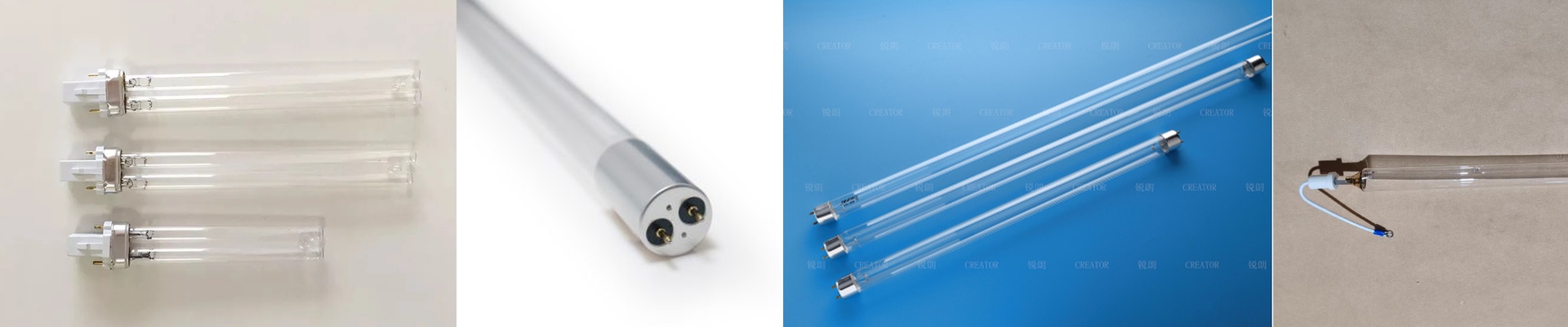
These are simple drop-in replacements. We match the footprint and the pins of your original gear so you don’t have to spend your afternoon rewiring racks. Before any batch leaves us, we run them through a spectrometer. We verify the irradiance levels so you get the exact mW/cm² your line speed requires. One last tip: check your cooling fans. If they’re clogged with dust, the lamp runs hot and burns out way too fast. Keep the air moving, and your lamps will actually last as long as they’re supposed to.