

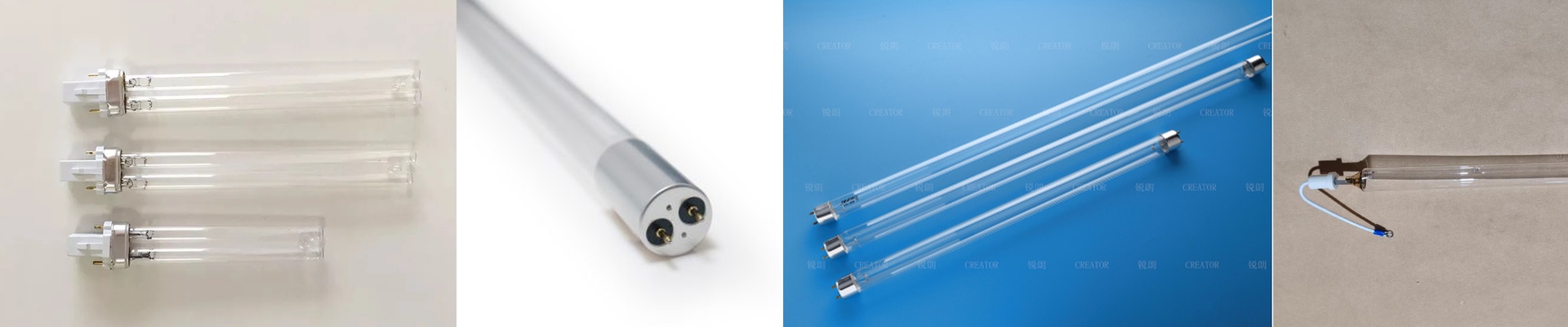


On a food line, microbes don’t care about the next washdown window. Downtime and failed audits cost money—plain and simple. So we built a UVC curing and sterilization lamp setup that delivers repeatable, measurable lethality where it has to: on contact surfaces, in the shadowed corners, and even when line speed is changing on you. What matters, technically We run an ozone-free low-pressure mercury vapor lamp, with the primary germicidal punch at 254nm. At 100mm, you’re seeing peak irradiance of 180–220 mW/cm². A high-reflectance dichroic reflector focuses that output into a clean irradiance profile, so you’re not wasting energy and the dose map stays predictable across the target. The lamp pulls 800W input, holds a stable arc, and maintains output within ±3% over 9,000 hours. The system is rated for 100,000 cycles without meaningful degradation in starting reliability. Why it holds up in a food plant In food processing, the job isn’t “surface treatment.” It’s consistent lethality under messy real-world conditions—humidity swings, stops and starts, and parts that aren’t friendly to line-of-sight. At 254nm, DNA and RNA absorb hard, and with a delivered dose of 60–100 mJ/cm², we routinely hit ≥3 log reduction on common pathogens: gram-positive and gram-negative bacteria, molds, and yeasts. So what does that translate to? Faster cycles without chemical rinses, lower energy than thermal disinfection, and fewer surprise shutdowns. Here are the details that bite you if you ignore them Installation has to be aligned tight. If you don’t maintain the designed irradiance profile, you’re going to get cold spots. A 20mm change in distance can swing the dose by 25–30%, so your fixturing and reflector geometry need to match the product geometry. The lamp works with stainless-steel enclosures and standard quartz sleeves for wet environments. But—and this matters—use a ballast matched to the arc length and starting characteristics. If it isn’t, you’ll burn the lamp out early and wonder why.