



Out on the press floor, every pass has to cure clean—no leftover tack, no color drift, no surprise stops. When you’re running at line speed, lamp output stability isn’t a number on a data sheet. It’s the difference between making schedule and making scrap.
What matters under the hood
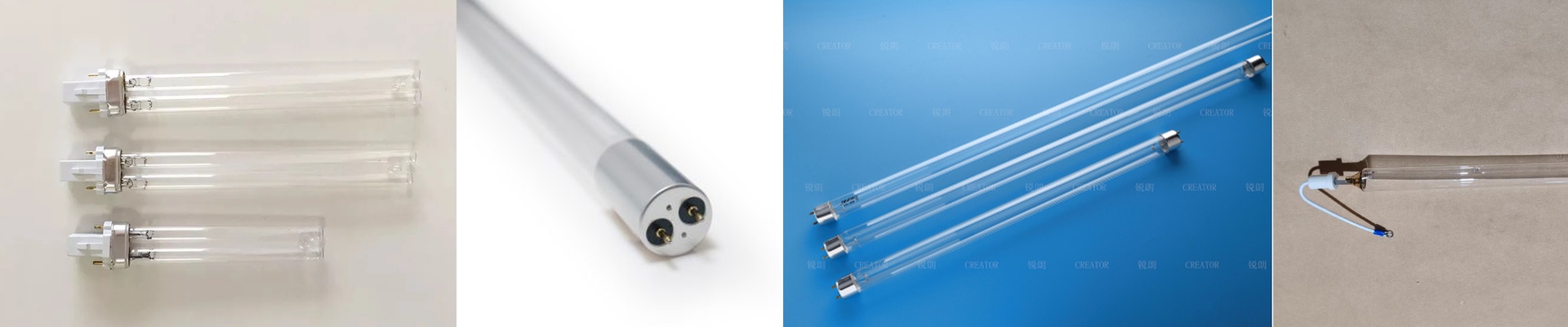
Gallium halide UV curing lamps are built around predictable spectral output and repeatable irradiance. Compared with standard high-pressure mercury vapor lamps, the gallium halide formulation concentrates energy around 365nm and 385nm, which lines up tightly with the photoinitiator absorption windows in a lot of UV inks and coatings. That tighter spectral match wastes less broadband energy, gives you a better surface cure without overheating the substrate, and keeps cross-linking more consistent across the web. We design for performance you can measure: stable peak irradiance across the arc length, dose repeatability run-to-run, and a lamp life curve that holds output where the process needs it. Typical operational life lands at 5,000–8,000 hours with controlled spectral decay, and reflector efficiency stays up thanks to dichroic coatings that keep heat directed away from the substrate.
Why this matters in practice
In UV textile printing, the substrate is often sensitive—synthetic blends, coated fabrics, thin transfers that scorch if the system runs hot. Gallium halide lamps deliver the curing energy density you need while keeping substrate temperature lower, which supports faster cycle speeds and a higher first-pass yield. You see the payoff in uptime and cost. Output stability cuts cure-related defects, so there’s less re-running. Longer lamp life and predictable replacement intervals trim service labor and spare parts. Energy use drops because the spectral match is tighter, and fewer lamp changes mean fewer line stops.
The shop-floor details you can’t skip
Gallium halide lamps work with most UV offset, flexo, and screen presses, but they need a stable ballast and proper reflector alignment to hit the rated irradiance. Output is sensitive to voltage fluctuation and cooling airflow, so verify supply stability and ducting before you commission. Also check your ink’s photoinitiator profile—some formulations do better with a blended spectrum, while others perform strongest with the gallium halide peaks.