

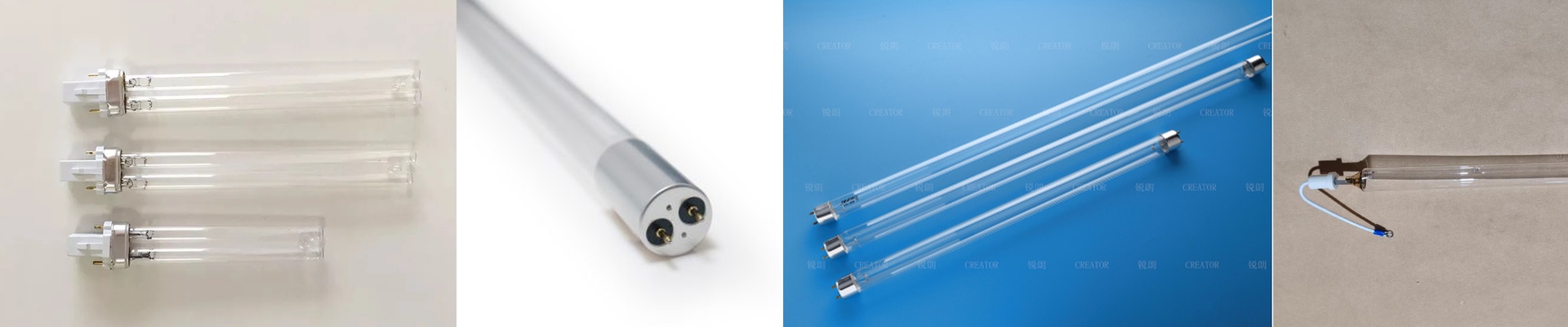


On the press floor, uneven ink drying isn’t just a headache. It’s a direct hit to yield. When the thermal and irradiance profile across the print platform is off, you get pinholes, adhesion failures, and cure that varies from sheet to sheet. That means scrap and rework. The fix comes down to spectral control. We built our 365nm UV curing lamp around a high-pressure mercury vapor discharge, tuned to the absorption peak of the photoinitiators you’re running. The result is stable spectral output that gives you repeatable cross-linking, shift after shift. What matters is what you can measure. We hold peak irradiance at the substrate above 1.8 W/cm², with a narrow band centered at 365nm. The full-width at half-maximum keeps energy where the ink needs it, instead of dumping it as waste heat. The quartz envelope and dichroic-coated reflector geometry shape the beam for uniformity. Center-to-edge energy variation drops below 5% across typical print widths. That translates to consistent cure energy density, typically exceeding 600 mJ/cm² — enough to lock in color density and surface toughness without overcuring. Here’s why it plays across different presses. In offset, the lamp runs cooler and cleaner to protect plates, while still delivering the dose required for thicker ink films. For flexo, the narrow spectral profile cures fast on thin films, without the heat build-up that can distort substrates. In screen, the high peak irradiance punches through thick deposits and cures from the bottom up, eliminating tack and blocking. Match the lamp length, arc gap, and reflector design to the job, and you get uniform cure across the sheet, faster line speeds, and fewer rejects. One practical note: compatibility matters. Match the lamp to your curing module — arc length, end-of-lamp connectors, and reflector focal distance all have to line up. We supply units sized for common press platforms, but if you’re integrating with older mercury systems, check that the power supply ballast matches and that ozone is managed. Keep reflectors aligned and run routine radiometer checks, and you’ll hold the energy density the job demands.