



15 Years of Mercury UV Lamp Engineering: What Actually Makes These Lamps Reliable
We spent 15 years getting these mercury UV lamps right—fine-tuning them until they stopped being the quiet backstage gear and started being the workhorses you can count on in live production. The whole point never changed: build a lamp that meets global quality standards, period. No cutting corners. That means designing something that doesn’t just behave perfectly in a lab. It has to survive the real world—the plant floor, the long shifts, the heat, the vibration.
Power, Voltage, and Size: The Real Trade-Offs
Here’s the thing: a mercury UV lamp is a high-intensity discharge device. We set them up to run at high voltage—think 400V—so the arc inside the quartz tube ignites reliably, every time. That voltage is matched carefully to the tube’s wattage and length, so you get the right heat and UV intensity in the space you have. Take a 2500W output in a standard length. That concentrates a lot of energy into a compact footprint, which is exactly what you need for curing and drying. But there’s no magic here. More power density means more heat. So your cooling system has to be properly matched to the lamp. If it isn’t, you can shorten the lamp’s life or even damage the socket. Plan for the heat, and the lamp rewards you.
The Quartz and the Connectors: Where Reliability Lives
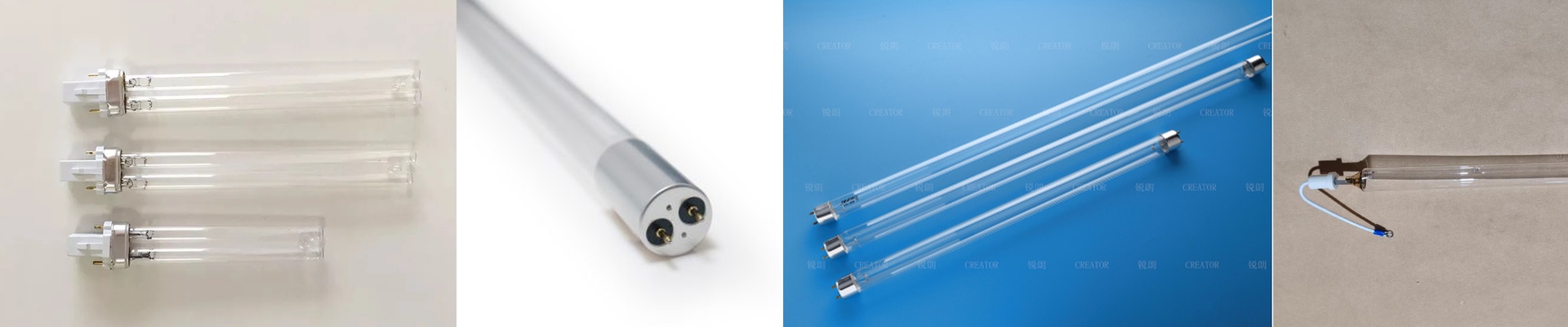
The heart of the lamp is the quartz envelope. It takes extreme thermal shock without cracking, and it transmits UV cleanly. We use a specific coating or doping on the quartz to manage the spectrum and protect the internal amalgam. That’s what keeps output stable and stops the tube from blackening too soon. And the connectors—like R7s or SK15—are not interchangeable. They’re engineered to handle high current and the way the quartz expands and contracts with heat. The R7s design, for example, gives you a solid, two-contact connection that can take the heat and the constant vibration of continuous operation. Use the wrong connector and you’re asking for poor contact, arcing, and a lamp that burns out fast.
Built for the Job: Performance You Can Feel on the Floor
We built these lamps as drop-in replacements for the toughest industrial work. After 15 years of development, the focus stayed simple: reliability under pressure. The exact voltage and wattage combination gets the lamp up to the right temperature quickly, so warm-up time drops and production keeps moving. The quartz body and the rugged connectors are made to take a beating—especially the daily start-stop cycles that kill weaker gear. For you, that translates into fewer maintenance interruptions. Wire it up, match the specs, and it just performs. No drama. Just steady output, shift after shift.