


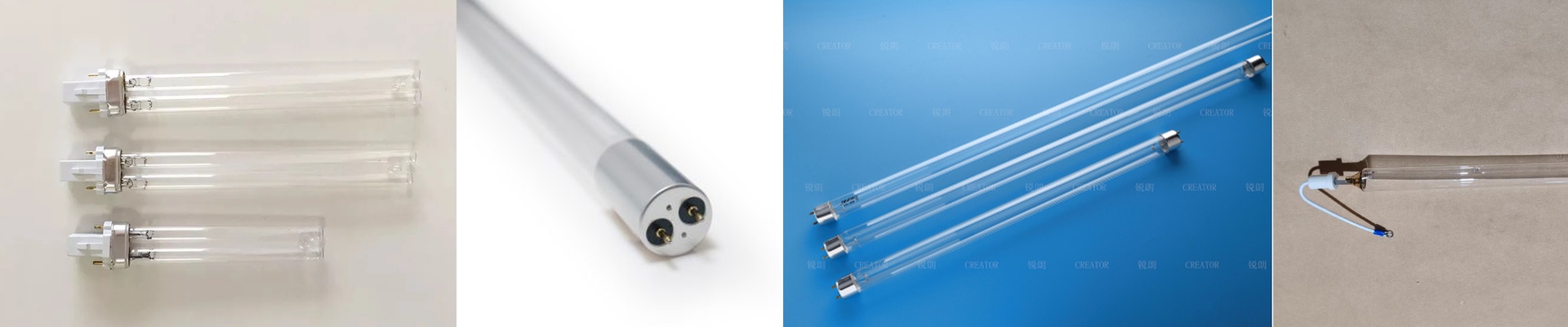

The press is running. You can hear the motors, smell the solvents, and feel the heat pouring off the UV curing units. Then the energy bill lands—again. In any printing plant, the UV systems are one of the biggest single electrical loads, and every extra kilowatt-hour stacks up across shifts. The real question isn’t whether you can keep curing quality steady. It’s whether you can keep it steady while pulling roughly 20% less power. That’s where industrial-grade low-pressure UVC germicidal lamps earn their keep in the pressroom. They put out intense, targeted energy at 254 nm, tuned to hit photoinitiators in many UV ink and coating formulations. Match the lamp to the right reflector geometry, power supply, and thermal setup, and you cut energy without shorting the dose needed for cross-linking.
What actually matters: output, stability, and life
Low-pressure UVC lamps aren’t just “UV lamps.” They’re low-pressure mercury vapor discharge devices built to deliver a dominant line at 254 nm, with a secondary line at 185 nm depending on the envelope material and whether the lamp is ozone-free. When your photoinitiator spectrum overlaps the UVC band, concentrating energy at 254 nm can be more efficient than a broadband source because the photons go where the chemistry does the work. These are the variables you can measure and verify in the real world:
- Spectral output and consistency: The main output sits at 254 nm. For curing, spectral stability matters because ink formulations are tuned to specific absorption bands. If the lamp drifts or starts throwing “hot spots,” the effective photon flux hitting the ink layer changes.
- Peak irradiance and dose uniformity: Curing is photochemistry—irradiance (mW/cm²) and total delivered energy (mJ/cm²) set the result. Reflector design—dielectric or polished aluminum, contoured precisely—shapes the UVC output across the web or substrate. The target is repeatable peak irradiance across the cure window, not one bright stripe.
- Output stability over time (low decay): Industrial UVC lamps should hold output as they age. In practice, you want thousands of hours before the drop forces you to re-qualify the cure profile. We’ve run units past 5,000 hours with less than 5% output decline under controlled lamp-driver conditions.
- Lamp life and electrode robustness: Low-pressure lamps have finite electrode life. Industrial versions use engineered electrodes and fill-gas pressure control to stretch life and reduce end-of-life blackening and output loss.
- Electrical efficiency and thermal behavior: Low-pressure UVC lamps can be driven at lower wattages than high-pressure mercury lamps while still delivering usable UVC flux, which cuts kWh. But efficiency also depends on the driver and ignition method—mismatched drivers waste energy as heat and shorten lamp life. These aren’t marketing lines. They’re measurable outcomes: stable spectral output, repeatable irradiance profiles, and predictable aging.
Why this works on the floor: stable cure, lower kWh, fewer swaps
Energy savings only matter if the job still cures. Under-cured ink means adhesion failure, solvent carryover, blocking, and scrap. Over-curing wastes power and can cook the substrate. The point of a low-pressure UVC system is that you can trim power while keeping delivered UV dose inside the validated window.
The energy savings are direct
A typical pressroom UV curing train—lamps, reflectors, cooling, and ballast losses—draws serious power, continuously. Swap in low-pressure UVC lamps matched to an efficient driver and reflector package, and many plants see total UV system power drop by around 20%. The exact number depends on press configuration, lamp count, and line speed, but the mechanism is simple: lower-pressure discharge means lower input power for the same spectral output, and modern drivers can have lower conversion losses than legacy ballasts.
Cure performance stays repeatable
Keep the same cure window, the same line speed, the same ink film thickness. What changes is the energy needed to hit the same cross-linking, because the lamp output is concentrated at 254 nm and the system is optimized to deliver it efficiently to the substrate. You get fewer power spikes, less excess heat, and more consistent cure run after run.
Uptime improves
Lower power draw reduces heat load on the curing unit and the press around it. Fewer thermal trips. Fewer lamp-overheat alarms. Fewer production stops to recover cooling. It also lowers heat stress on substrates—especially plastics and thin films—where temperature control is part of making the job right.
Maintenance intervals stretch
Industrial low-pressure UVC lamps are built for long duty cycles. When the lamp, driver, and reflector are specified as a matched set, end-of-life behavior is predictable. Fewer change-outs. Fewer spares in the stockroom. Less downtime spent requalifying the cure profile after lamp replacement.
The practical details: installation, compatibility, and constraints
Low-pressure UVC germicidal lamps can deliver real energy savings, but only if you integrate them correctly.
- Match the lamp to the driver and ignition method: Low-pressure lamps have specific voltage and current needs. A mismatched driver leads to unstable operation, reduced output, and premature electrode wear. If you’re replacing legacy gear, confirm the driver type and ignition method—don’t assume it will “just work.”
- Reflector geometry and alignment are critical: UVC output is only useful when it hits the ink. Reflectors must be designed for 254 nm reflectivity and positioned to deliver uniform irradiance across the cure width. Even small misalignment can create bands of under-dose.
- Keep it clean: UVC output is sensitive to contamination. Ink mist, dust, and oil films on the lamp envelope or reflector cut delivered dose. Set cleaning intervals, and make sure your cleaning materials are compatible with quartz and reflector coatings.
- Control heat at the lamp and the substrate: Low-pressure lamps still make heat. You need adequate airflow and heat removal to keep output stable and protect the substrate. If you run high speeds, verify cooling capacity under full load.
- Ozone management is part of the design: Standard low-pressure lamps can generate ozone via the 185 nm line. If you need low ozone, use ozone-free versions or ensure the reflector and housing are ozone-compatible and ventilated as designed. Don’t assume any lamp is “safe” without checking envelope specs and operating details.
- Safety and exposure control: UVC is hazardous to skin and eyes. Any retrofit must include proper interlocks, shielding, and operator training. Treat UVC like any high-intensity radiation source—engineering controls first, warnings second. One real-world trade-off: low-pressure UVC lamps are optimized for 254 nm, which works well for many curing chemistries but isn’t universal. If your ink set is tuned mainly to longer wavelengths (e.g., 365 nm, 385 nm, 405 nm), you may need a hybrid approach—or confirm that your photoinitiator package responds strongly in the UVC band. The lamp is powerful, but it has to match the chemistry. The printing floor doesn’t reward wishful thinking. It rewards repeatable dose, stable output, and predictable operating costs. If you want to cut energy use by roughly 20% without risking cure performance, spec a low-pressure UVC germicidal lamp system with the right driver, reflector, and thermal plan—then measure irradiance, lock in the profile, and let the energy meter tell the story.